
Civil War Tour: Petersburg
June 2015
Petersburg National Battlefield Park
It's dark, which makes it difficult to write a letter, or re-read the last one you received. You've already played a few rounds of cards. So what is a bored soldier going to do? Watch mortar shots fall. Watching the arc of mortar shells gracefully etched into the night sky was a popular pastime for soldiers and citizens, although sometimes dangerous if it was too close. As one sign said, during a siege the soldier battles boredom and toil more than the enemy. This is the largest used in the siege of Petersburg; it is a 13 inch seacoast mortar.
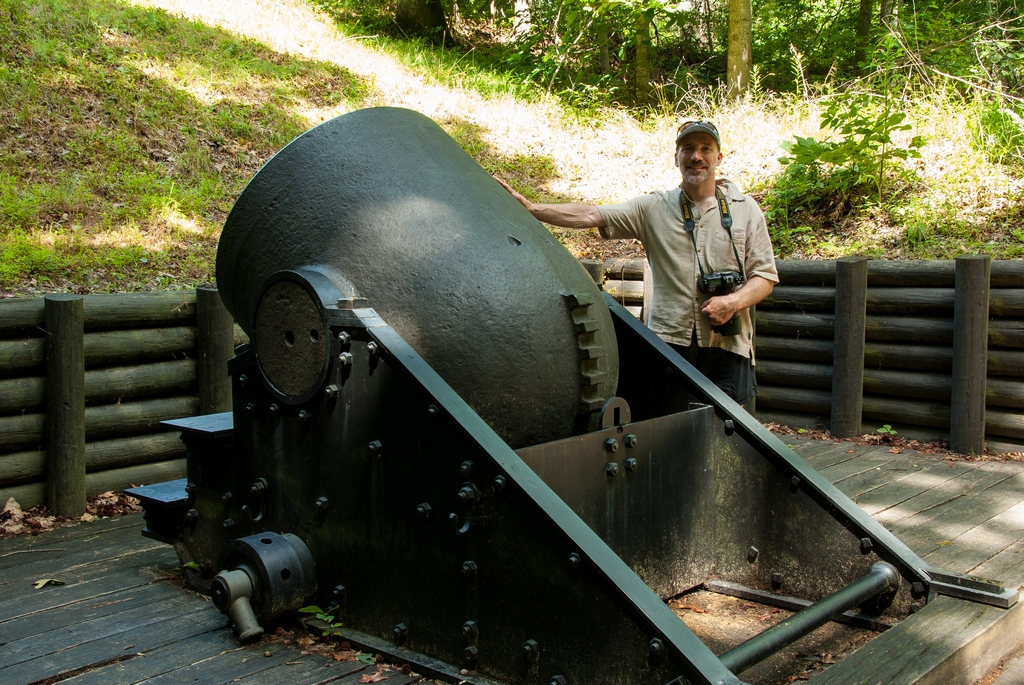
Petersburg was strategically important. Both sides of the Civil War knew that if it fell, the Confederate capital in Richmond would also fall. The siege on Petersburg was long and ugly. The larger park includes four areas: The Eastern Front (pictures of which are on this page), the Western Front (no pics, sorry), City Point (next page) and Five Forks (also next page).
The Eastern Front consisted of many different batteries. Each battery was basically earthen work fortifications, artillery / cannons, and the men who were members of that group.
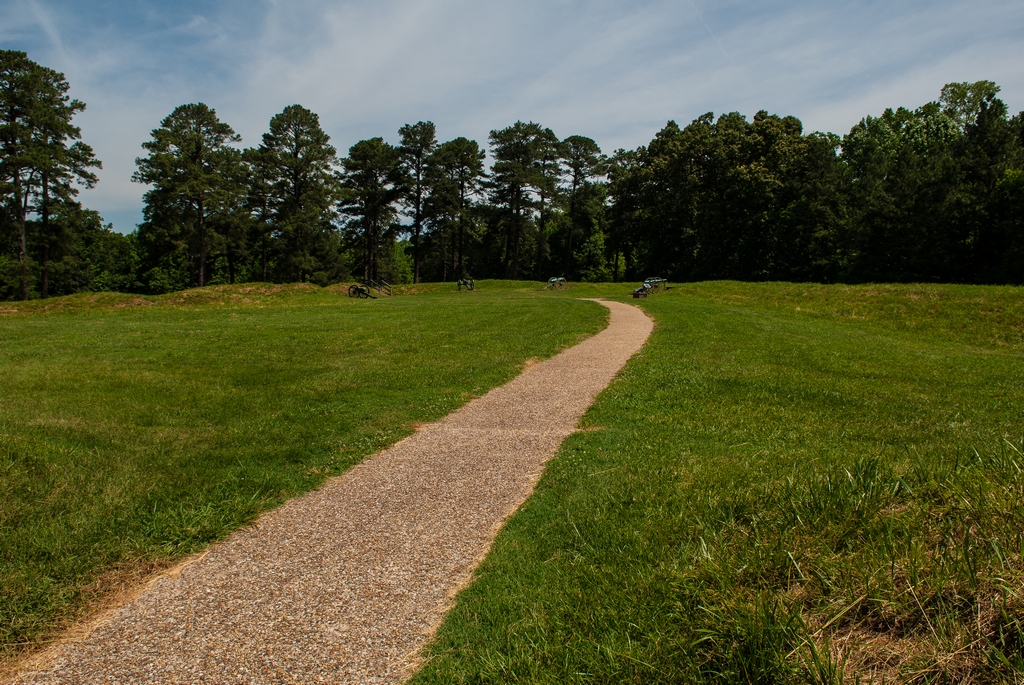
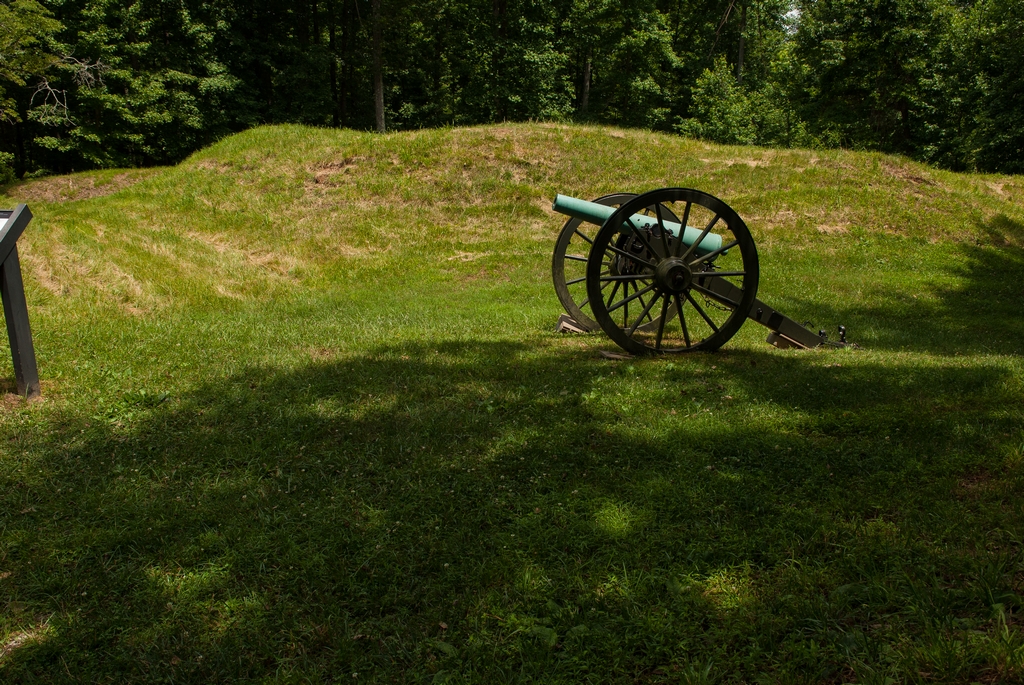
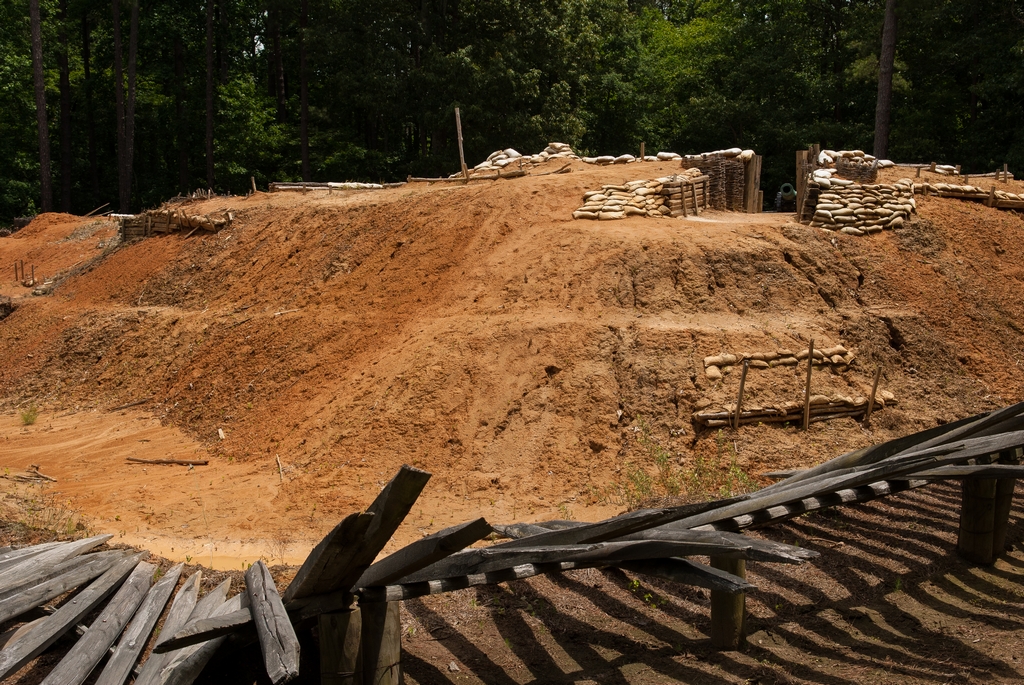
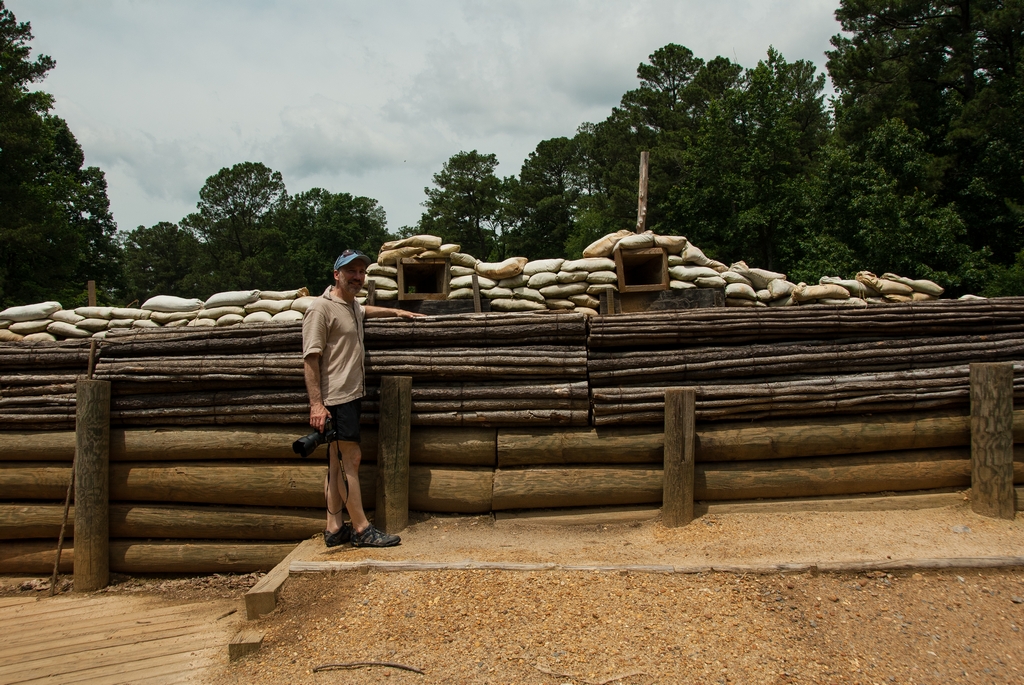
One of the fabulous sections of this park is the recreation (on a small scale) of what one of the fortifications would have looked like at the time. The earthworks absorbed the impact of shots coming in. Wood shored up the earthworks. To prevent enemy troops from swarming over the wall, wooden spikes would be pointed outward like a wall. (The area was severely deforested during this time.) Immediately inside this would be a moat. These precautions would protect both the troops and the cannons. The distance between the moat and the earthen wall is compressed in this recreation.
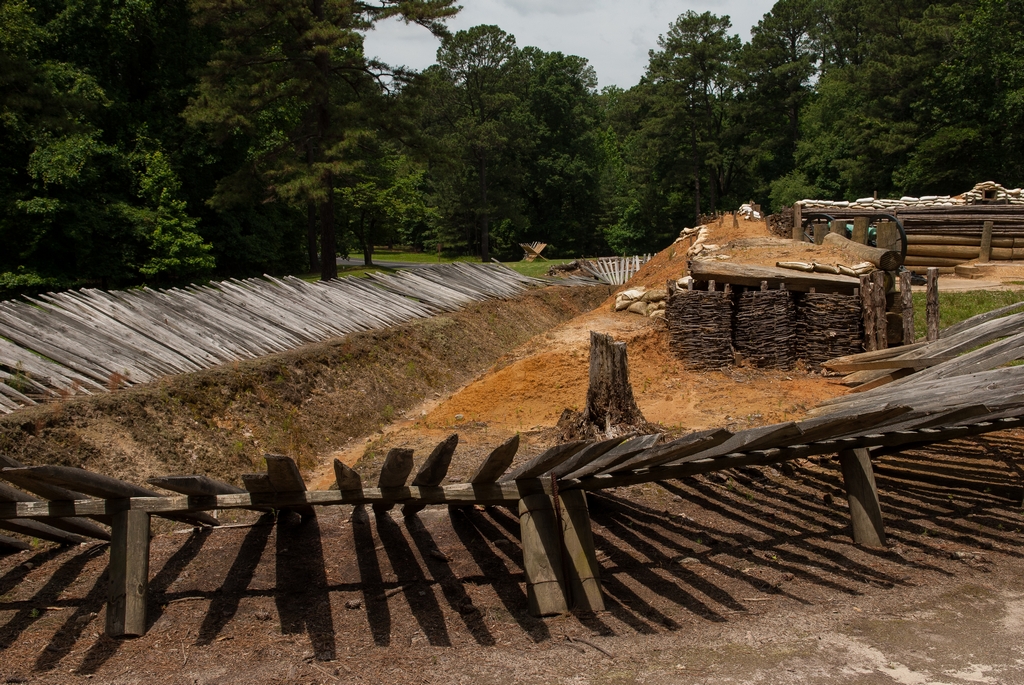
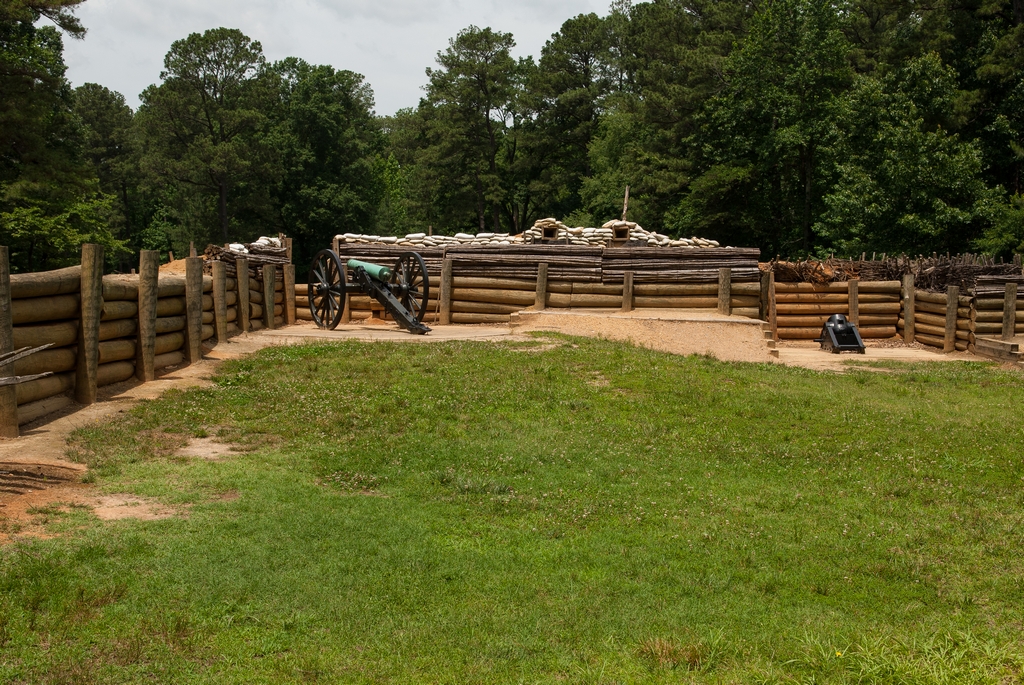
Anyone want to try storming the fortification?
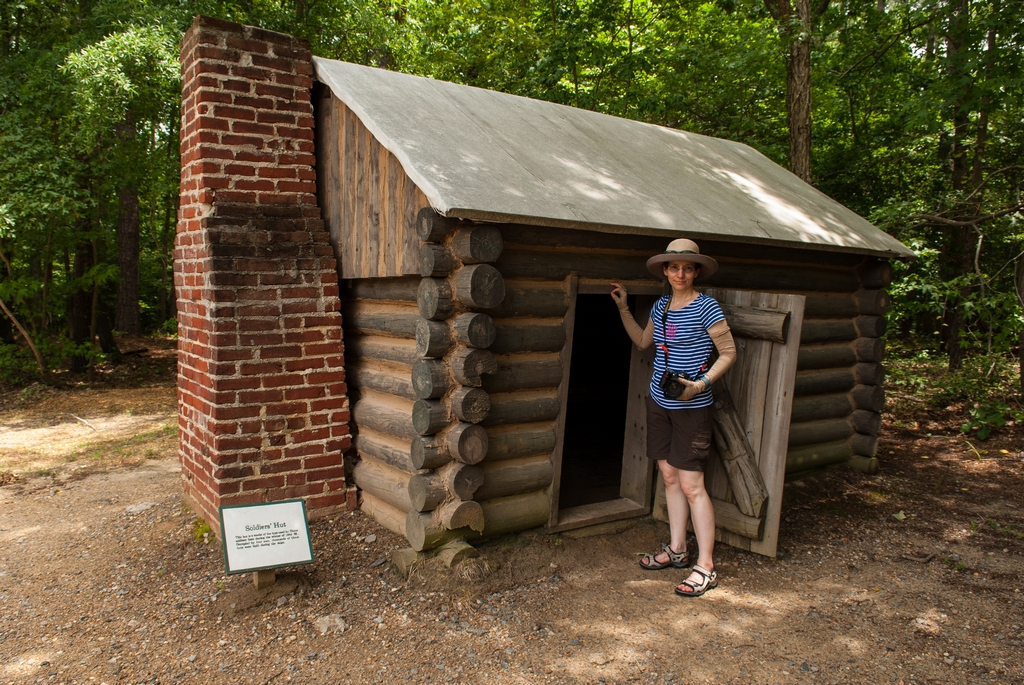
This next picture is a model of the 4-man soldier hut used in the winter during the siege. Cramped, perhaps, but much more comfortable than a tent on the ground.
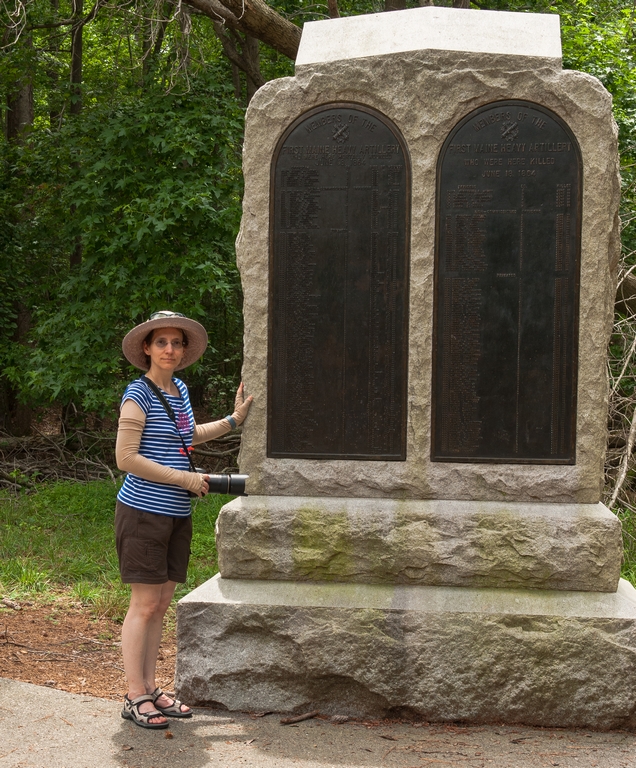
Fort Stedman (again, think earthen works not a permanent fort) had a large monument to the inexperienced Maine First Heavy Artillery, which lost 604 men -- out of about 900 -- in an unfortunate charge.
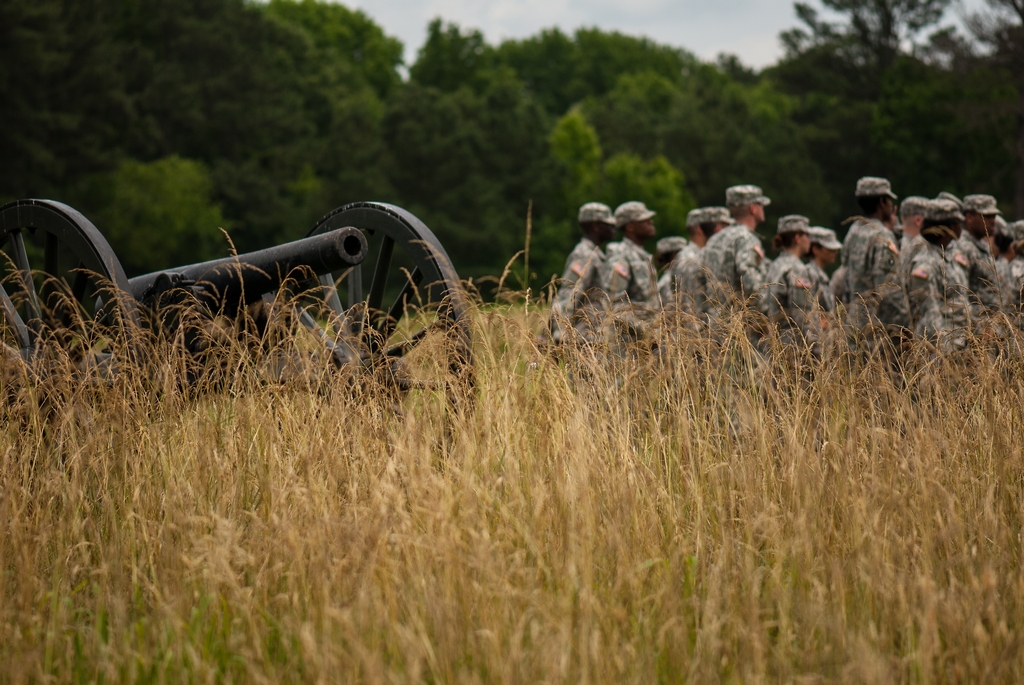
Paul and Anne had marveled at the logistics of keeping an army supplied and fed. At Fort Stedman, we were fortunate enough to encounter a group of Quartermasters In Training, and eavesdropped on the lecture that the instructor was given. There is a Quartermaster training facility near the park. (Unfortunately, we did not have time to visit the museum there.)
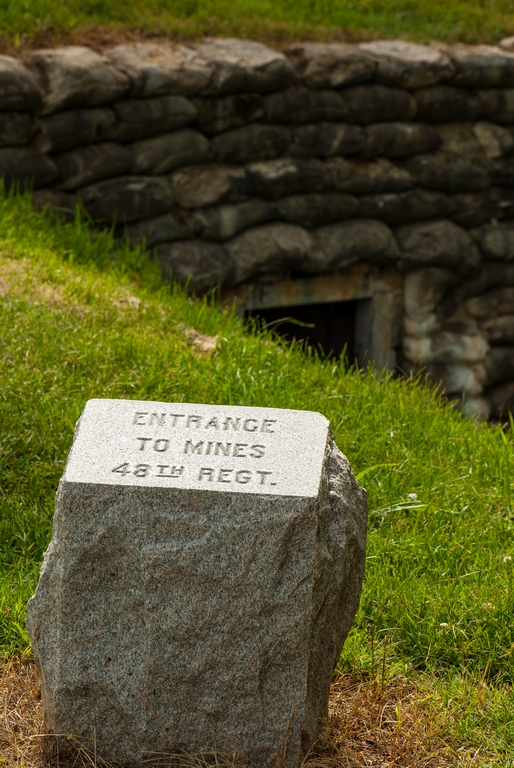
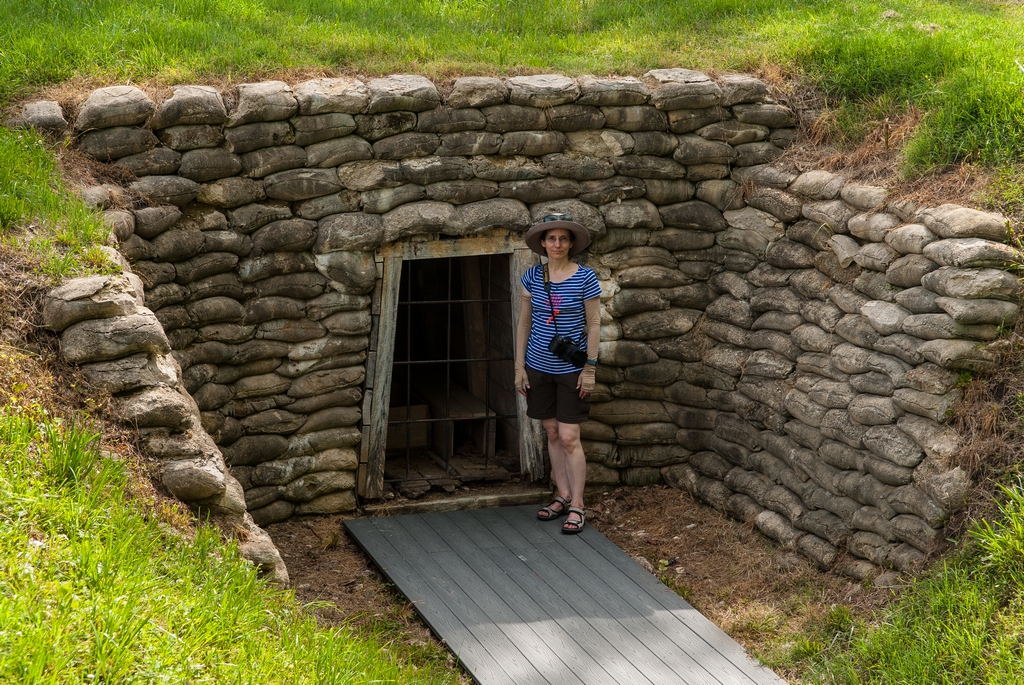
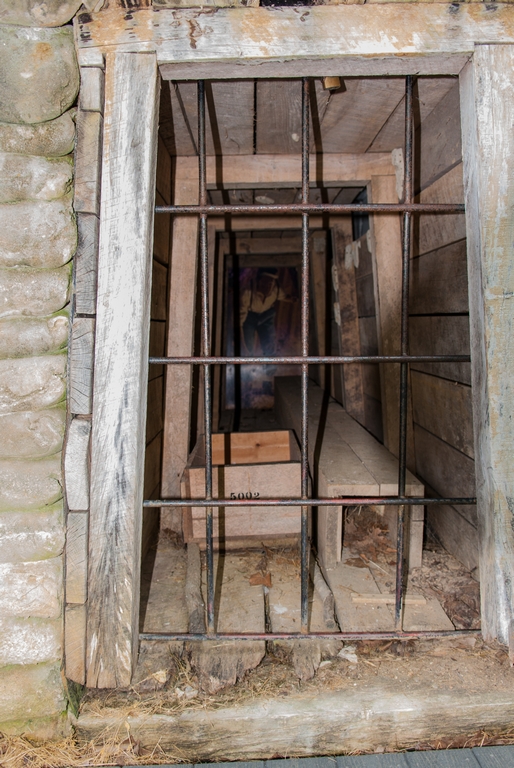
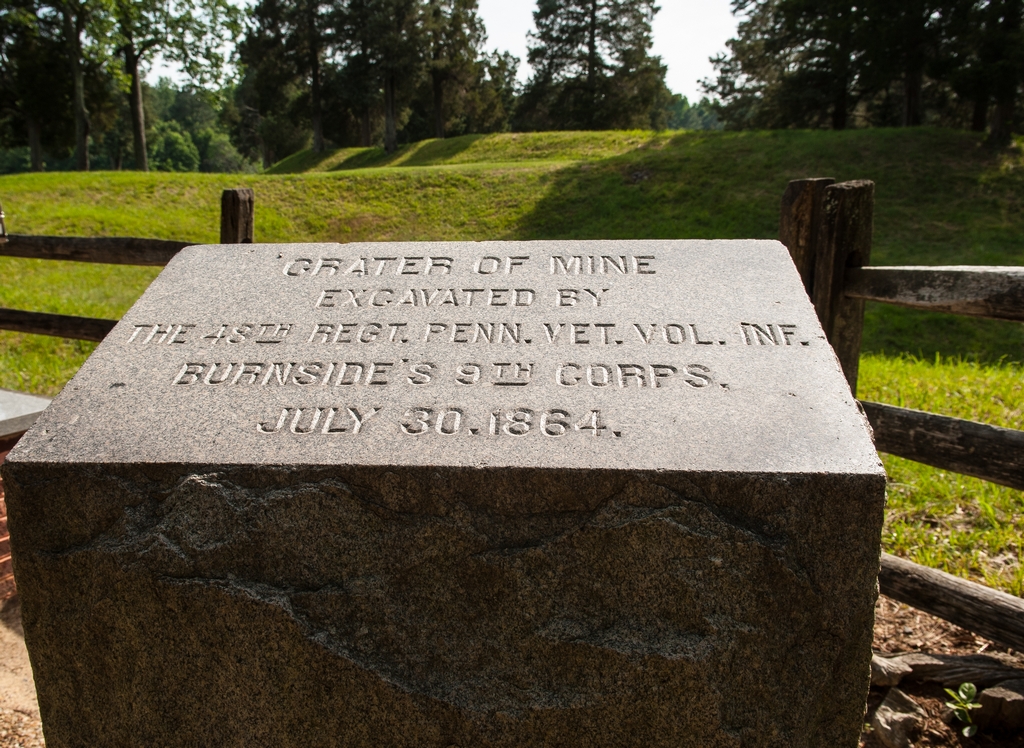
Battlefield Park includes The Crater. The Union forces were being held at bay by the Confederate forces here. The 48th Pennsylvania Regiment, which consisted mostly of miners, figured out a way to dig underneath the Confederate fortifications. While digging in was not unheard of, the distance required here was long and the military commanders did not think it could be done. But using techniques from the mines, the soldiers were able to dig the long tunnel. Explosives were set off, causing a large hole in the Confederate line. Unfortunately, the Union leadership assigned at this time to this location consisted of an alcoholic who has already lost most of his commanders. (This is according to the park ranger who gave an informative talk. Always take advantage of park ranger talks if you can!) The opportunity was not only wasted, but additional lives were lost.
Being witness to this site was very personal for Paul. His grandfather was a Pennsylvania miner, as were the members of the regiment who dug this tunnel. His grandfather lost his life in the mines of PA.
On to the other areas of Petersburg ...
Updated April 2026