
Plymouth Page 3
July 2012
continued from page 2
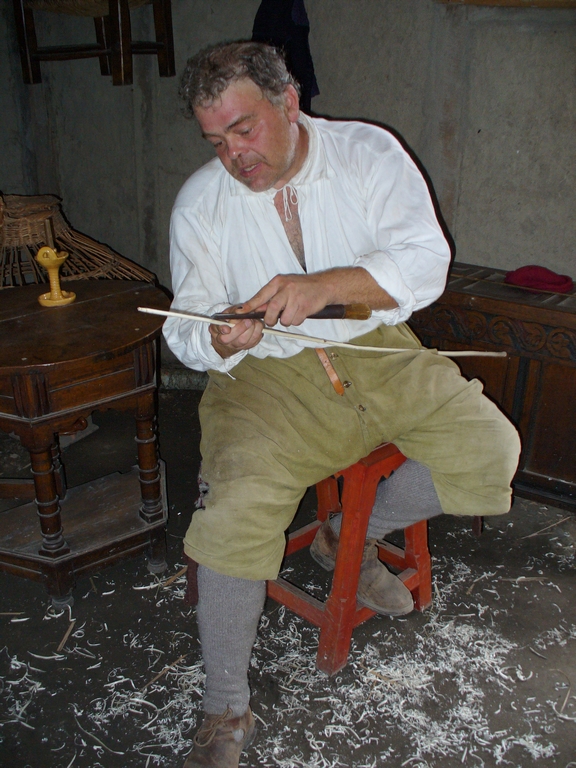
This man was making a pole to load his musket. He said that he and 8 other men were sending a proposal to take on the debt of the colony, in return for rights to the fur trade in the area. This way everyone else in the colony can claim their land, build houses, and farm while the 9 taking on the debt would make money from furs. This is what ended up happening.
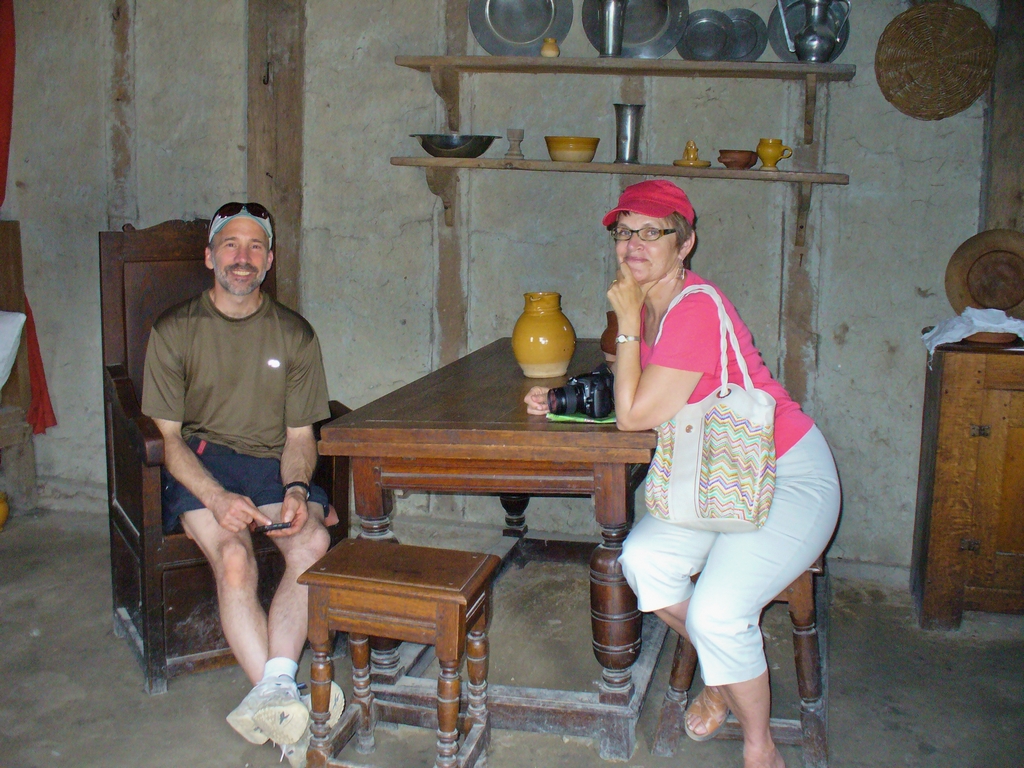
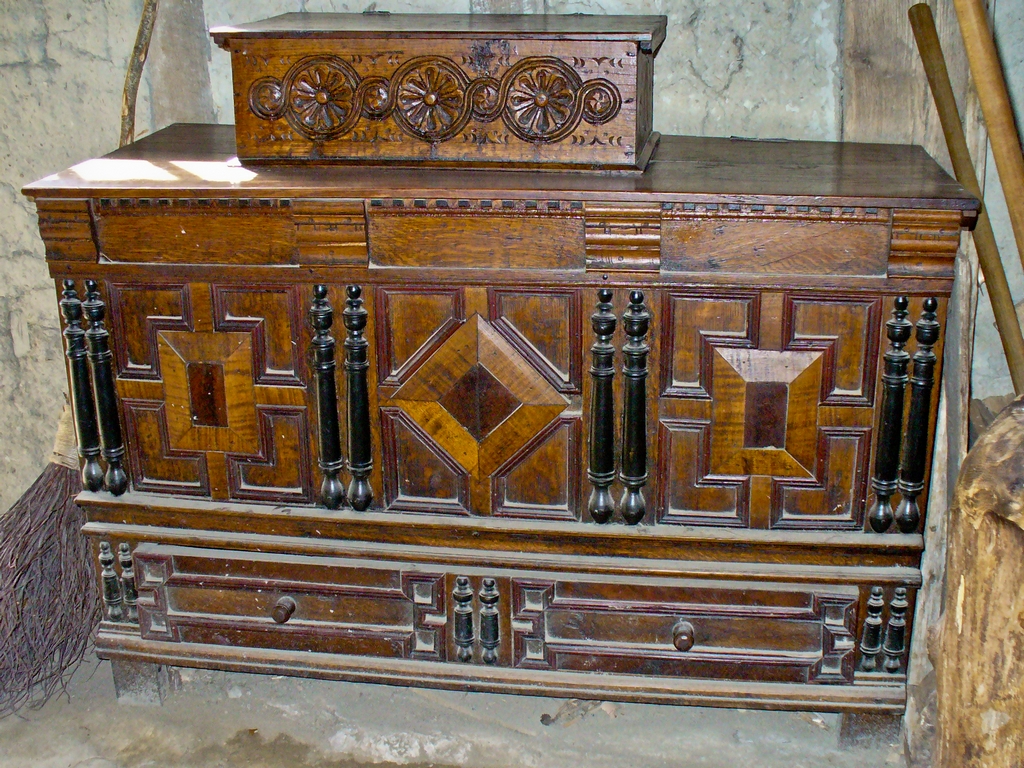
The furniture in the colony, at this point (1627), was all imported from England. It seems ornate to us, but this is what the class of people who came over would have purchased. These are created in the 'craft shop' at the Plantation. They replace them regularly, because they don't want the furniture or other items to look too worn; the colonists have only been here for around 7 years so most items should look like they aren't substantially older than that.
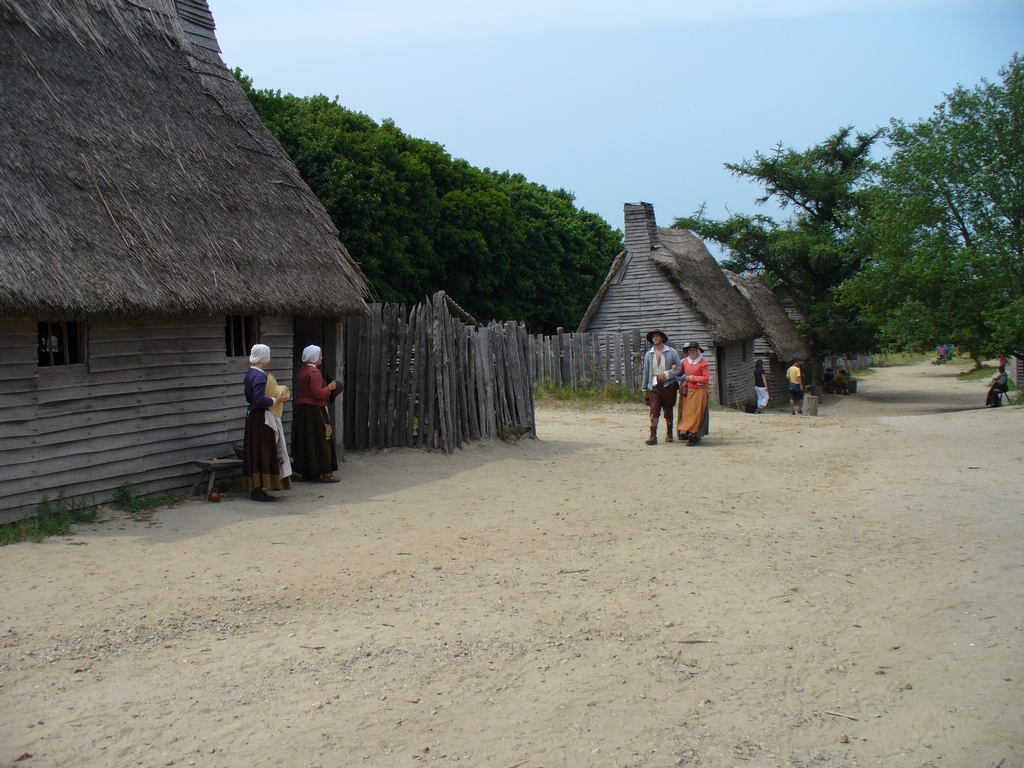
The following day was going to be a wedding. The couple strolling up the street are the betrothed. It was fun talking to her later on, and her 'sister'. The person portraying the sister was probably 17 years old, and is a natural at this.
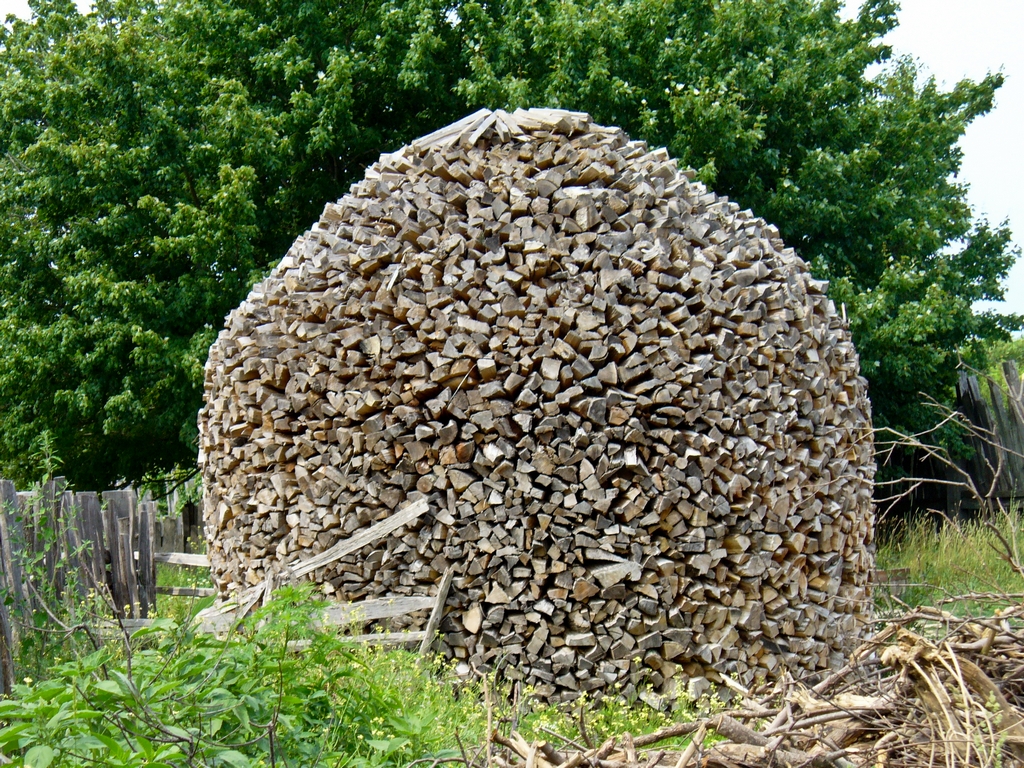
The wood pile for fires.
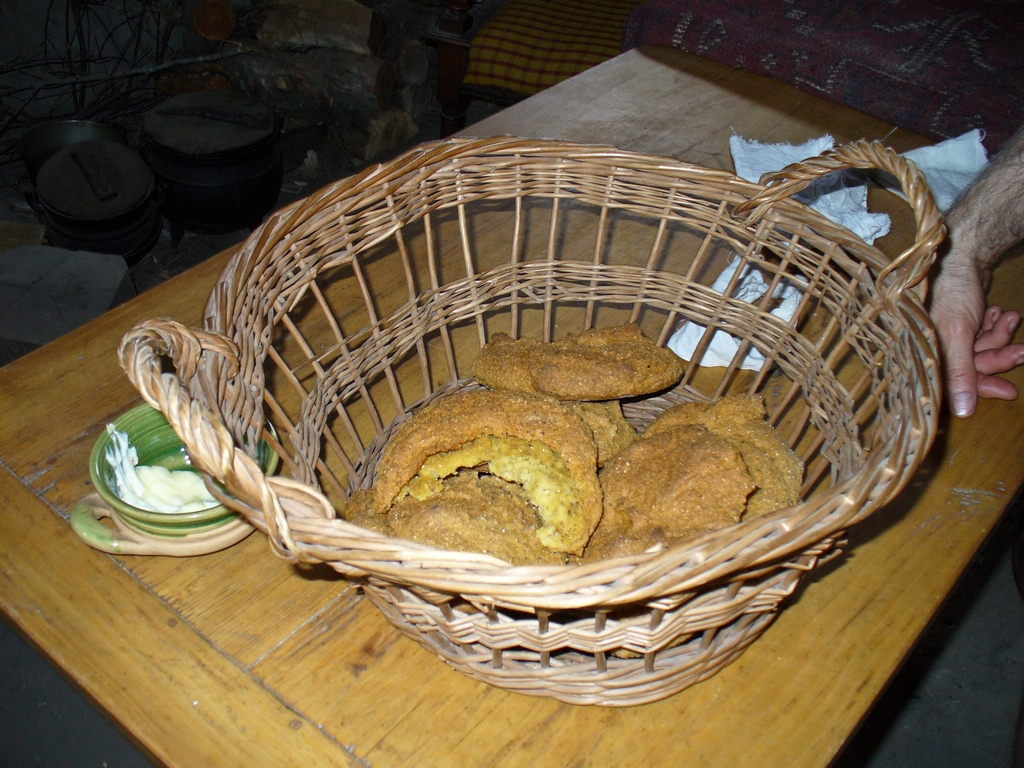
Corn was a very important part of their diet, although they weren't crazy about it. It would not rise like wheat. (They called everything corn, actually. Wheat corn, maize corn, barley corn, .... ) These little loaves had been made earlier in the day.
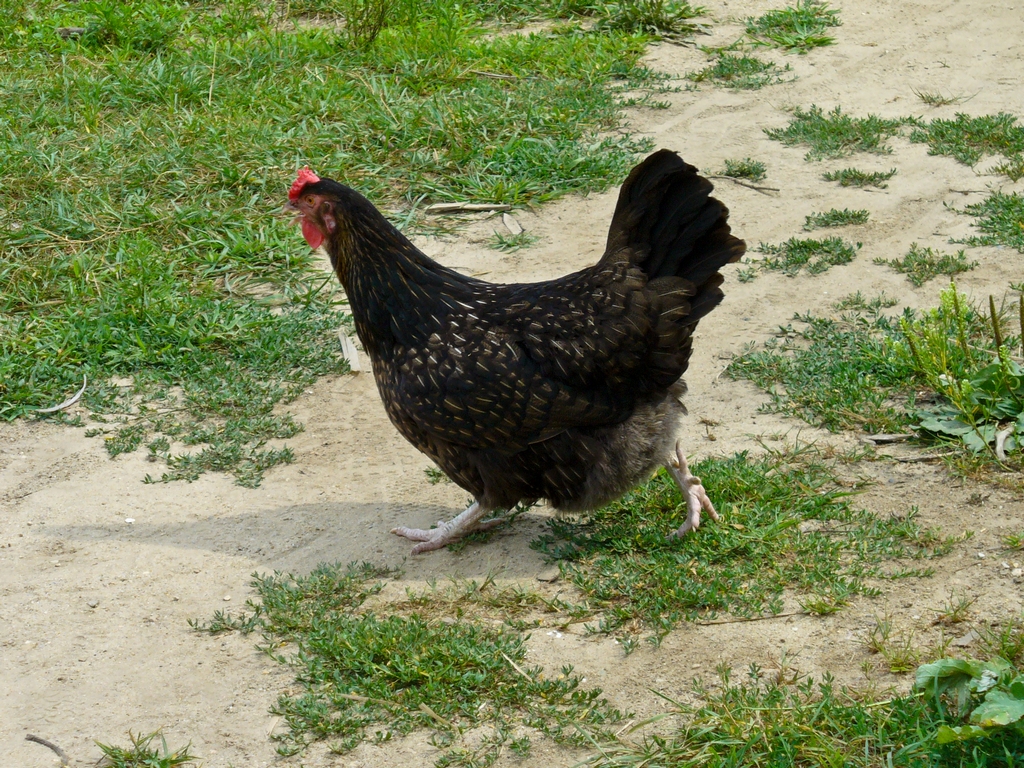
Chickens were on the loose. This was a particularly handsome fellow.
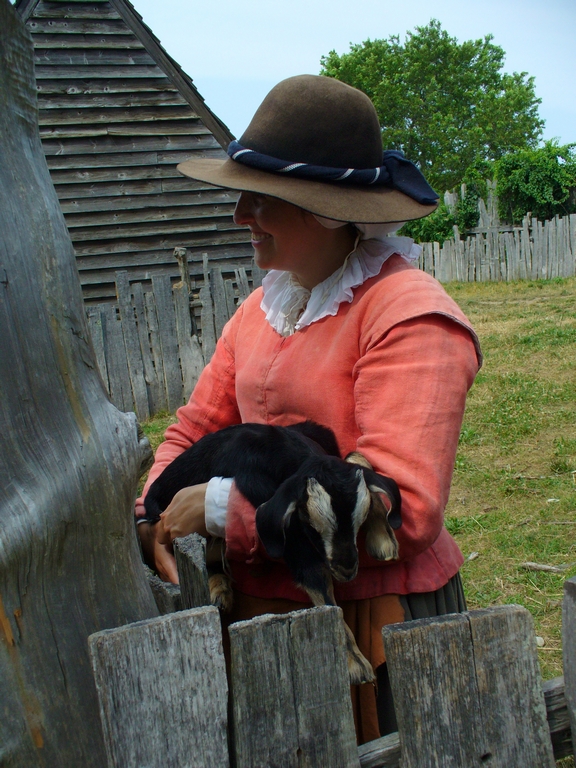
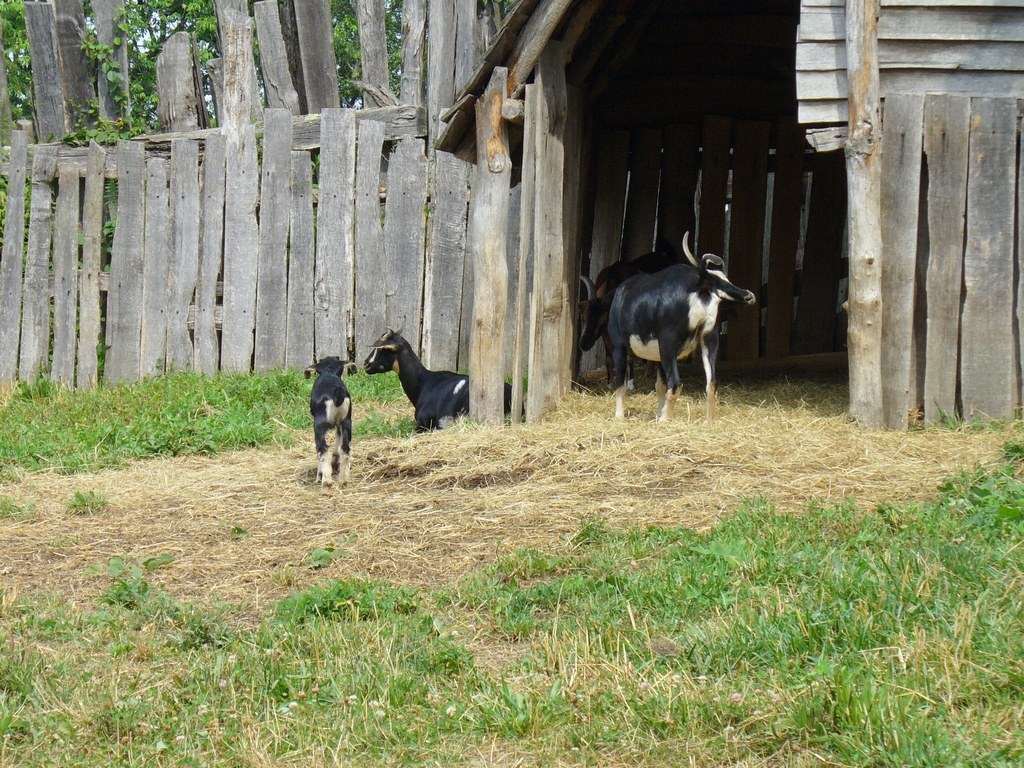
The bride-to-be is holding a young goat. The goat is very striking looking, and only 1 month old.
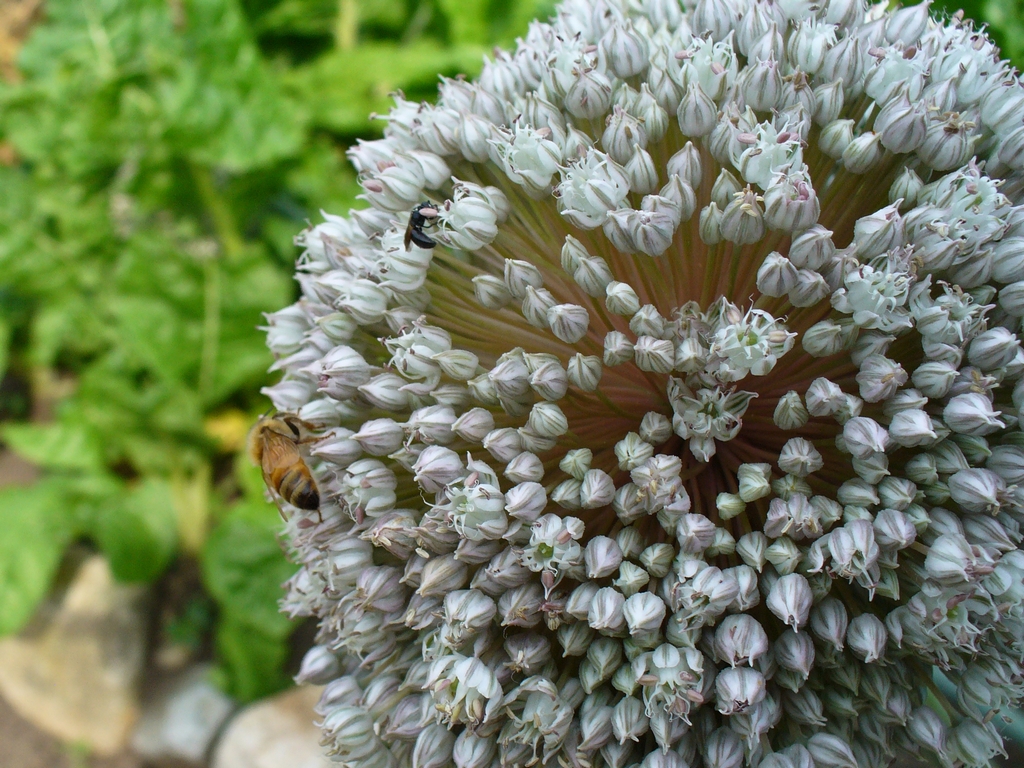
A very large onion flower.

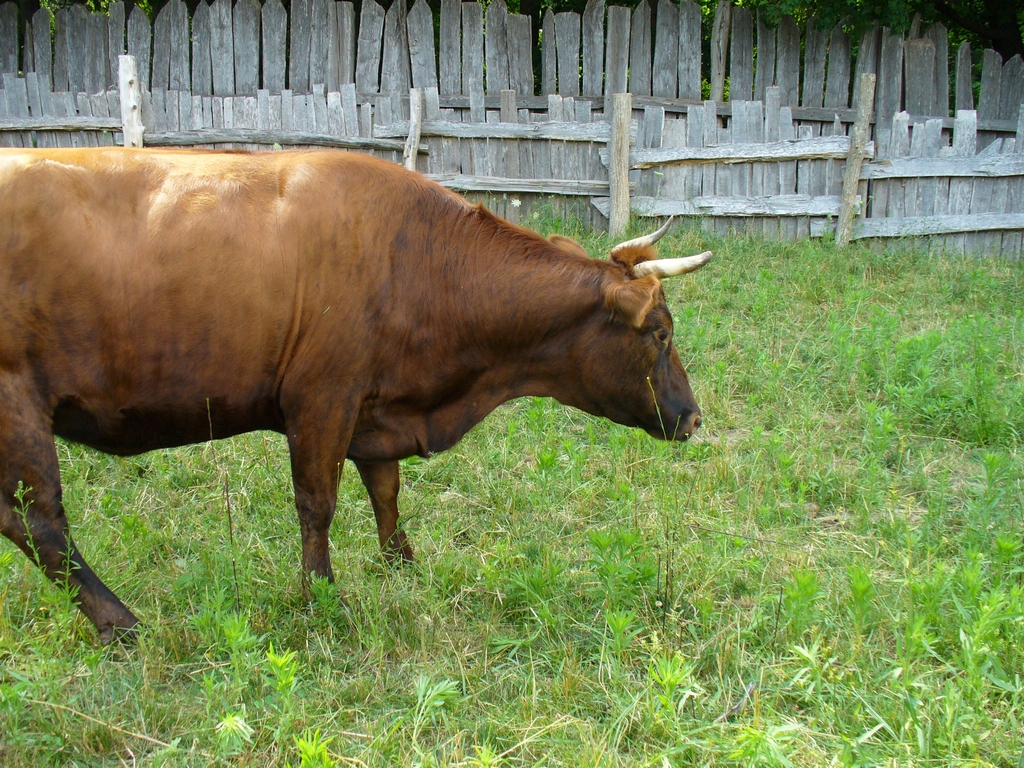
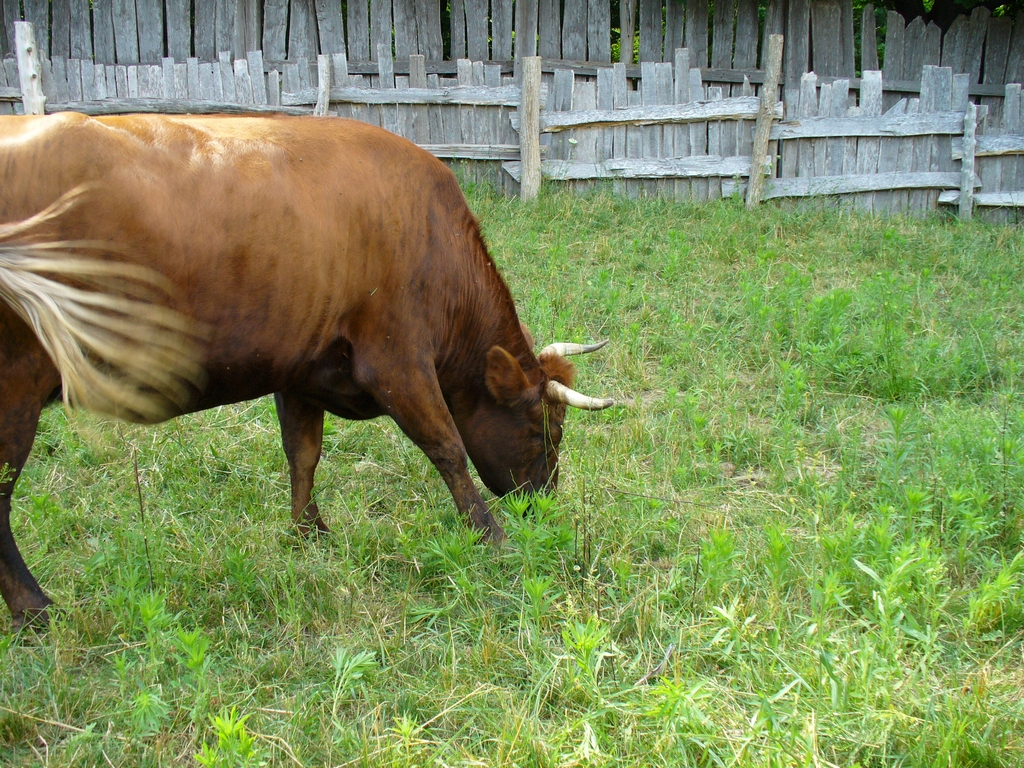
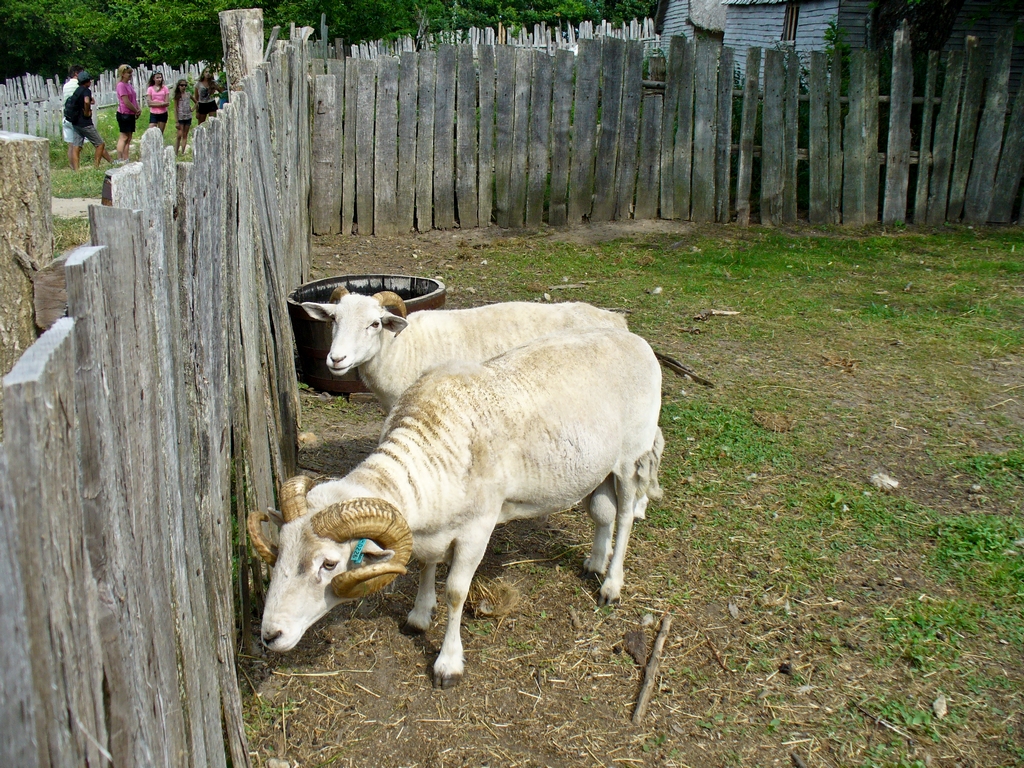
Don't let those horns fool you. This somewhat formidable looking animal is actually a hefer, due to give birth soon.
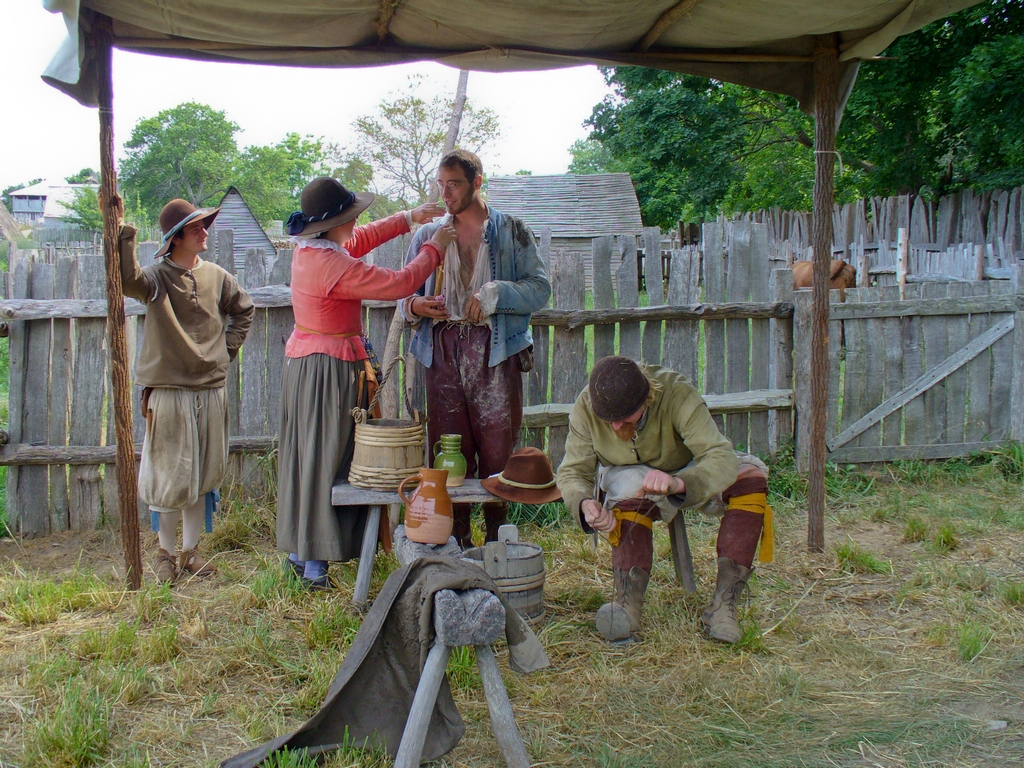
The groom for the next day's wedding was accosted in a good natured joke by other men in the colony; this is why his outfit is rather messy. The betrothed exchanged some gifts here. You can see the felt hat that many of the people wore.
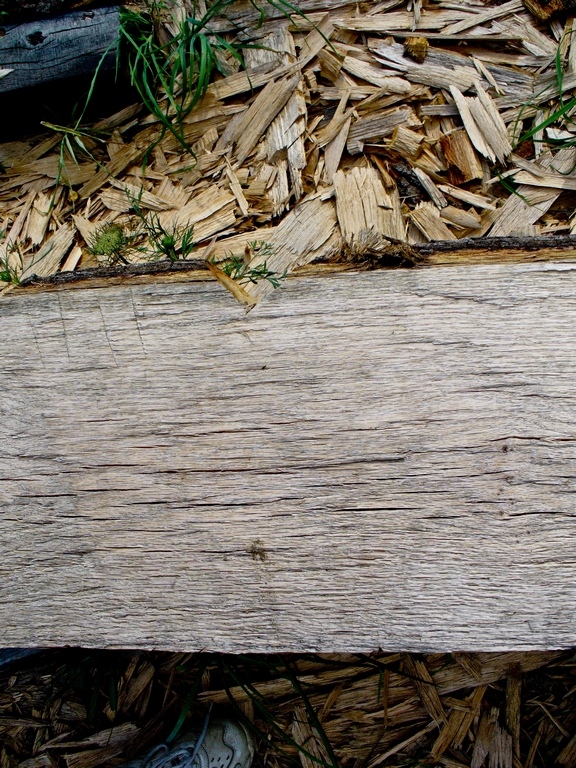
This picture is not the most informative, but if you look closely you can see a notch in the log. They did not have any wood mills. So the men notched the log in regular intervals, and then cut off the wood between the notches, in order to make square beams. They would then saw the large beam in to narrow planks. These would be used to build the houses. One of the houses burned down last fall, so they are in the process of building a new one. While in reality it would probably only take a couple of months to build the new house, because most of the workers' time is spent interacting with visitors, it will likely take a few years to build this replacement house.
These cute little goats have visitors like Anne trained. With a loud bleat, one of them gave notice that some clover and grass would be appreciated. Anne obliged them with a couple of mouth fulls.
Updated April 2026